
New Delhi is gearing up to host the 18th BRICS Summit at Bharat Mandapam on September 12-13, with extensive preparations underway across key venues, roads, hotels and security zones.
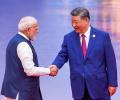
Ahead of Xi Jinping's visit, National Security Advisor Ajit Doval and Chinese Foreign Minister Wang Yi held extensive talks in Beijing on August 25 on the boundary issue and reached an eight-point consensus.

The Ministry of External Affairs (MEA) has issued a warning against 'malicious' and 'misleading' social media posts concerning the health of world leaders, specifically Chinese President Xi Jinping and South African President Cyril Ramaphosa, who attended the recent BRICS Summit in New Delhi. The warning comes amidst unverified claims about Xi's health and an official statement from Ramaphosa's office confirming his withdrawal from public engagements due to ill health.

Prime Minister Narendra Modi hosted a gala dinner for BRICS Summit leaders and delegates at Bharat Mandapam. The menu featured a range of Indian delicacies, including starters like 'khandvi mille' and 'khumb galouti', main courses such as 'paneer lababdar' and 'gucchi marmik', and desserts like 'shahtoot phirni'. The dinner was accompanied by a cultural performance.

Luxury hotels in Delhi are experiencing a significant room crunch and a sharp increase in tariffs ahead of the BRICS Summit. Many marquee properties show no availability or are quoting rates exceeding six figures per night around the September 12-13 event, highlighting a gap in India's hospitality infrastructure.

The successful hosting of the 18th BRICS summit in New Delhi has provided a significant boost to the BJP, offering a timely opportunity to strengthen its narrative against the opposition ahead of crucial assembly elections next year. BJP sources highlight the BRICS grouping's strong condemnation of the Pahalgam terror attack and the consensus declaration as major diplomatic victories for the Modi government, countering criticisms of its foreign policy. The party plans to leverage these outcomes during its month-long Seva Sankalp campaign to connect with various sections of society.

The challenge for India lies in navigating complex landscape to its best advantage. The BRICS Summit will test its navigation skills, asserts former foreign secretary Shyam Saran.

Xi's bilateral meeting with Modi was substantial and readouts from both sides gave indications of rapprochement, if not a reset of bilateral relations between India and China, notes Ambassador T P Sreenivasan.

Russian President Vladimir Putin has arrived in India for a three-day visit to attend the BRICS summit and hold bilateral talks with Prime Minister Narendra Modi, focusing on expanding trade, investment, and energy cooperation amidst global geopolitical challenges.

The highlight of the successful BRICS Summit was its ability to deliver a joint statement that all members, including Iran and the United Arab Emirates, embroiled in the war in West Asia, signed.

Iranian President Masoud Pezeshkian arrived in New Delhi for the BRICS summit, where he is scheduled to hold bilateral talks with Prime Minister Narendra Modi to enhance trade and strengthen overall relations. His visit is particularly significant given the heightened tensions in West Asia and recent US economic sanctions against Iran. Pezeshkian highlighted BRICS' role in fostering economic resilience and reducing dependence on the US dollar, while the summit itself aims to address global challenges and bolster collective resilience in critical sectors.

Central Delhi has undergone a significant beautification drive, including extensive lighting, floral displays, and BRICS-themed signages, in preparation for the upcoming BRICS Leaders' Summit. The New Delhi Municipal Council (NDMC) and other civic bodies have focused on sprucing up key routes, hotels, and the summit venue, Bharat Mandapam, to welcome delegates and visitors.

Russian President Vladimir Putin is set to visit India for a three-day trip to attend the 18th BRICS Summit and engage in bilateral discussions with Prime Minister Narendra Modi. The summit will focus on strengthening strategic partnerships and addressing international issues, with Putin also scheduled to meet other world leaders.

Odisha's Koraput Coffee, specifically the 'Tiger Bright' brand, was distributed to delegates and journalists at the 18th BRICS Summit in New Delhi. This initiative has brought international attention to the Arabica coffee grown by tribal farmers in the Koraput district, highlighting the state's local produce and the 'Vocal for Local' spirit. The coffee's unique cultivation methods and the support from the Tribal Development Co-operative Corporation of Odisha Ltd (TDCCOL) have significantly boosted its market presence and benefited tribal families.

New Delhi was told it had given something up; in reality it had stopped talking about it, notes Dr Abhishek Puri.

Delhi is experiencing heavy rainfall and strong winds, prompting the India Meteorological Department (IMD) to issue a red alert, which is impacting ongoing preparations for the crucial BRICS Summit.

The New Delhi Municipal Council (NDMC) is establishing a 24x7 command centre and implementing extensive civic preparations to ensure the smooth hosting of the 18th BRICS Summit. These measures include enhanced sanitation, beautification, traffic management, and coordination among various agencies to present a welcoming city for world leaders.

Chinese President Xi Jinping's upcoming visit to India for the BRICS summit is a pivotal diplomatic event poised to significantly impact bilateral ties and global cooperation amidst ongoing international instability.

Delhi Police has implemented a comprehensive multi-layered security system for the upcoming BRICS Summit in New Delhi, deploying 15,000 personnel, 200 paramilitary companies, and over 500 CCTV cameras. The arrangements aim to ensure maximum security for visiting dignitaries while minimising public inconvenience, with extensive coordination across agencies and states, and robust measures at the main venue, Bharat Mandapam.

Executive Chef Kaushik Misra of the Taj Mahal, New Delhi, has meticulously curated an 'India Friendship Menu' for the 18th BRICS Summit delegates, blending India's regional flavours with international comfort foods and culinary references from participating countries.

The Delhi Traffic Police has issued a detailed advisory regarding traffic restrictions and diversions during the upcoming BRICS Summit from September 12-13. While Delhi will not be shut down, commuters should expect temporary stoppages and diversions, especially on routes used by VVIP convoys. The advisory covers movement for residents, essential services, public transport, and advice for exam candidates and hospital visitors, urging reliance on official updates.

BRICS leaders, in their New Delhi Declaration 2026, have called for wider access to Artificial Intelligence resources and stronger international cooperation to ensure the technology is safe, secure, inclusive, and reliable. The declaration outlines a broad technology agenda covering AI, cybersecurity, digital public infrastructure, telecom, quantum technologies, and advanced manufacturing, committing to implement the grouping's statement on 'Global Governance of Artificial Intelligence'.

Russian President Vladimir Putin will attend the BRICS summit in New Delhi on September 12-13, according to a presidential aide.

Chinese President Xi Jinping's first visit to India in seven years for the BRICS Summit and bilateral talks with Prime Minister Narendra Modi is set to address crucial aspects of India-China relations, including trade, investment, and persistent border tensions.

India is hosting the BRICS summit, leveraging the platform to address global trade tensions and champion the developmental priorities of the Global South, including food, energy, and supply chain security. The summit, attended by leaders like President Xi Jinping and Vladimir Putin, will focus on resilience, innovation, cooperation, and sustainability, with India aiming to strengthen intra-BRICS collaboration and discuss global matters. The expanded BRICS grouping represents a significant portion of the world's population and GDP, making its discussions crucial for global economic stability.
Chinese President Xi Jinping notably skipped a gala dinner hosted by Prime Minister Narendra Modi for BRICS leaders and other dignitaries, with sources suggesting he returned to his hotel to rest. Meanwhile, a grand cultural performance, 'BRICS Symphony - One Rhythm, Many Cultures', featuring artistes from member countries, was a highlight of the evening.

The National Security Guard has launched Operation BRICS Kavach to prepare for possible emergencies during the high-profile event.

India is hosting the 18th BRICS Summit in New Delhi, bringing together numerous world leaders including presidents from China, Russia, South Africa, Iran, and Egypt, along with prime ministers and foreign ministers from other nations. The summit will feature bilateral talks and highlights the expanded BRICS grouping's growing global influence and India's significant role as a founding member and current chair.

Iranian President Masoud Pezeshkian concluded his visit to India for the 18th BRICS Summit, announcing that Iran and the UAE agreed to move past previous tensions. This diplomatic breakthrough occurred during talks with Abu Dhabi's Crown Prince on the summit sidelines. Pezeshkian also met with PM Modi to discuss bilateral ties and West Asia developments, with Modi emphasising dialogue for regional peace. The BRICS summit adopted the New Delhi Declaration 2026, calling for global governance reforms and de-escalation in West Asia.

India successfully facilitated a significant diplomatic meeting between Iranian President Masoud Pezeshkian and UAE Crown Prince Sheikh Khaled bin Mohamed bin Zayed Al Nahyan on the sidelines of the BRICS Summit in New Delhi. This interaction, a diplomatic breakthrough given ongoing West Asia conflicts, occurred as BRICS adopted a declaration urging restraint and protection of civilians in the region, highlighting the bloc's commitment to peace and stability.

Following an all-vegetarian BRICS Summit dinner, Congress leader Rahul Gandhi stirred discussion by stating that 80% of Indians are non-vegetarian and celebrating the diversity of Indian non-vegetarian cuisine.

Malaysian Prime Minister Anwar Ibrahim's impromptu rendition of Kishore Kumar's classic 'Khwab Ho Tum Ya Koi Haqeeqat' has captivated audiences online, with a video of his performance garnering over a million views and widespread appreciation.

This article details the quarter-century journey of BRICS, from its inception as an economic acronym by a Goldman Sachs economist to its current status as an expanded eleven-member international bloc. It highlights its growth, key historical moments, and the significance of its upcoming summit, particularly with Iran's renewed importance in discussions.

The Congress party criticised the all-vegetarian menu served at the BRICS Summit gala dinner hosted by Prime Minister Narendra Modi, with Rahul Gandhi highlighting that 80% of Indians are non-vegetarian. The party accused the BJP government of imposing its dietary preferences and questioned why India's diverse culinary culture was not showcased.

BRICS nations have successfully reached a consensus on a joint statement following extensive negotiations, with India playing a crucial role in bridging differences, particularly among West Asian members like Iran, Saudi Arabia, and the UAE, despite regional conflicts and geopolitical tensions.

Former Bangladesh Prime Minister Sheikh Hasina has strongly criticised Prime Minister Tarique Rahman's decision to skip the BRICS summit in India, calling it "immature" and detrimental to Bangladesh's national interest. She argued that the absence lost opportunities for economic development and that foreign policy should not be driven by personal considerations. Hasina also highlighted the current "grave national crisis" in Bangladesh and her intention to return to restore democracy.

Bangladesh has confirmed that Prime Minister Tarique Rahman will not attend the upcoming BRICS Summit in India, clarifying that the invitation was extended to him as the BIMSTEC Chair, not as Bangladesh's Prime Minister. The nation is prioritising bilateral visits and discussions, while also addressing national interests like the expiring Ganges Water Sharing Treaty.

In recent years, China and Russia have pushed for de-dollarisation within BRICS, which India has resisted. One reason is that India does not want to hurt its relationship with the United States, and another is the fear of China controlling trade because the renminbi is considered the strongest currency in the bloc today.

India's Consul General in Shanghai, Pratik Mathur, extended greetings to Song Hou, Director General of China's Commercial Aircraft Corporation (COMAC), ahead of his visit to New Delhi for the BRICS Business Forum 2026. Discussions focused on B2B, technology, and connectivity ties, aligning with India's BRICS Presidency vision. The forum precedes the 18th BRICS Summit.

Prime Minister Narendra Modi welcomed BRICS leaders, including Russian President Vladimir Putin and Chinese President Xi Jinping, at the 18th BRICS summit in Bharat Mandapam. The leaders were photographed against the backdrop of Tamil Nadu's iconic Ramanathaswamy temple, a significant Hindu pilgrimage site. Modi explained the temple's importance to President Xi, highlighting its unique status as a Char Dham and Jyotirlinga shrine, and its historical and religious significance linked to Lord Ram.
